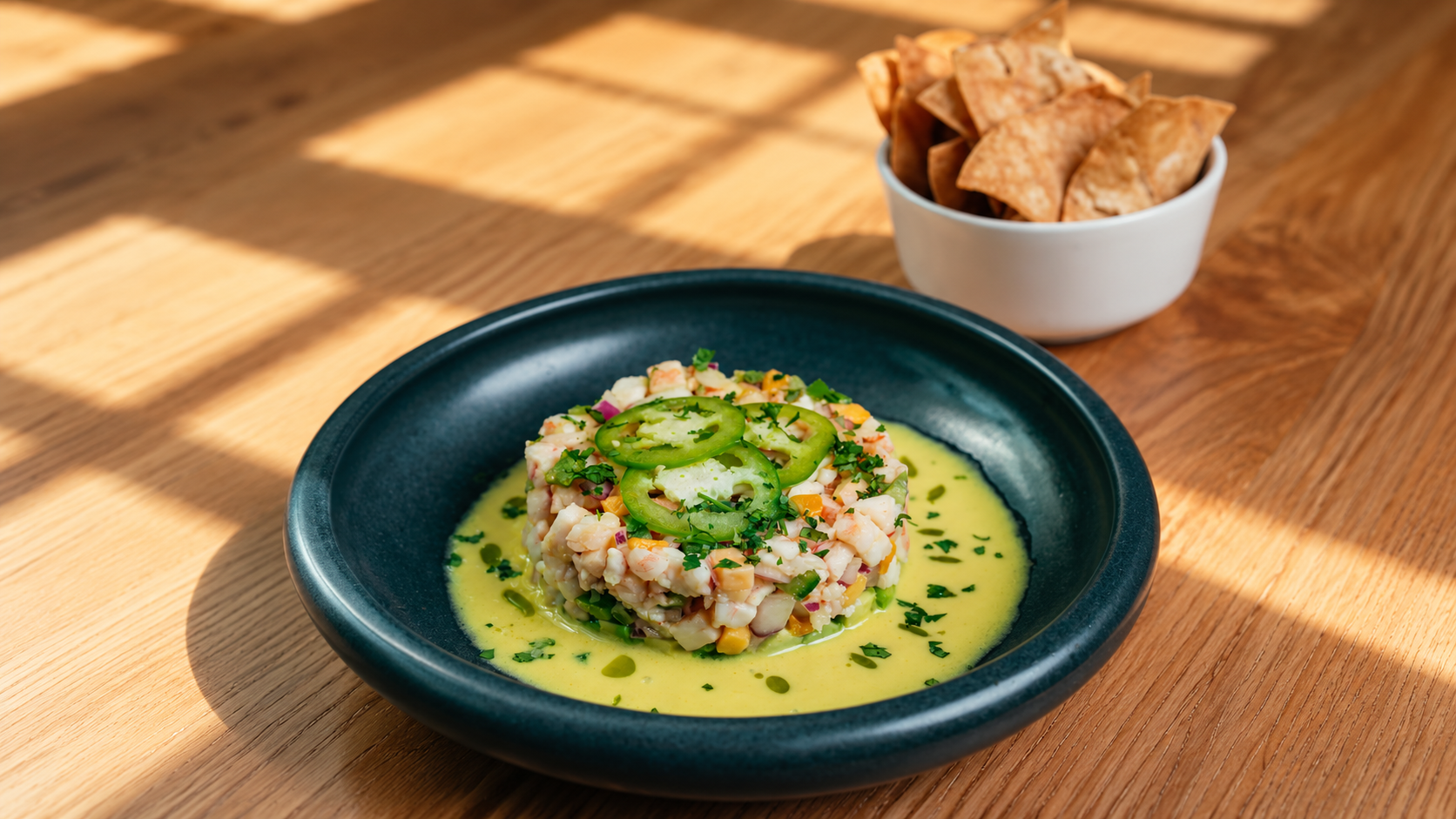
Cold seafood, bright lime, a little chilli heat, and the fresh snap of red onion make ceviche an easy choice on a sunny Vancouver afternoon. It is fresh, lively, and made for pairing with something cold in your glass.
As more Vancouver menus put their own spin on the dish, ceviche has become a favourite for diners looking for something light and refreshing. So what is ceviche, how is it made, and why does it pair so well with a cold drink?
This blog covers the history of ceviche, how it is prepared, what to know about freshness and food safety, the drinks we like alongside it, and where to find a good plate in Vancouver.
What Is Ceviche? A Quick Primer
Ceviche started on Peru’s coast, where people have paired raw fish with citrus for generations. Peru calls it a national dish and gives it its own national day in June. The method is simple. Cut raw fish into bite-sized pieces, toss it in fresh citrus juice and wait. The acid firms the flesh and turns it opaque, so it looks and feels cooked without ever touching a pan.
Peruvian and Mexican ceviche each have their own character. In Peru, the seafood is typically marinated briefly, leaving the centre silky and tender, with sweet potato and corn often served alongside. Mexican ceviche tends to sit in the citrus marinade longer, giving the seafood a firmer bite, while tomato, cucumber, and avocado add freshness before it is served on a crisp tostada.
The variations continue across Latin America and beyond. In Ecuador, people often serve shrimp ceviche with popcorn or plantain chips, while Chilean versions commonly feature corvina and plenty of cilantro. In the Philippines, kinilaw takes a different approach, using vinegar rather than citrus to brighten the seafood.
How Ceviche Is Made
Three things decide whether ceviche tastes great: the seafood, the citrus and what goes with them.
Choosing the Right Seafood
Firm white fish like halibut, sea bass, snapper or corvina holds up in lime. Shrimp and scallops add sweetness while octopus brings a nice chew.
Freshness beats everything else. Fish that smells clean and a bit like the ocean turns into bright, sweet ceviche. Fish past its prime goes mushy, and no amount of lime will save it.
The Citrus Cure
Lime juice contains citric acid, which changes the structure of fish proteins. Heat does something similar, which is why the fish firms up and loses its glassy look.
The liquid left in the bowl is leche de tigre, or tiger’s milk. Lime, salt, chilli, garlic, ginger, and fish juices make a tangy, spicy marinade, and many Peruvians drink it straight.
The Supporting Cast
Thin-sliced red onion, fresh chilli, chopped cilantro and a good pinch of salt show up in nearly every version. You get crunch, heat, a herbal lift and balance.
These are the essential elements of ceviche, each bringing its own flavour, texture, and freshness to the finished dish.
Common Ceviche Myths and Freshness Basics
The biggest myth is that lime cooks fish the way heat does. Citrus changes texture and colour, but it never reaches the temperatures that kill bacteria and parasites.
So sourcing matters most. We look for a fishmonger we trust, with fish kept cold from boat to counter. Many cooks choose fish the supplier froze first, which helps reduce parasite risk.
Eat it the day you make it. The acid keeps working in the fridge, and by morning the fish turns firm and dull. We treat ceviche as a same-day dish, ready to serve within a few hours.
What We Drink With Ceviche
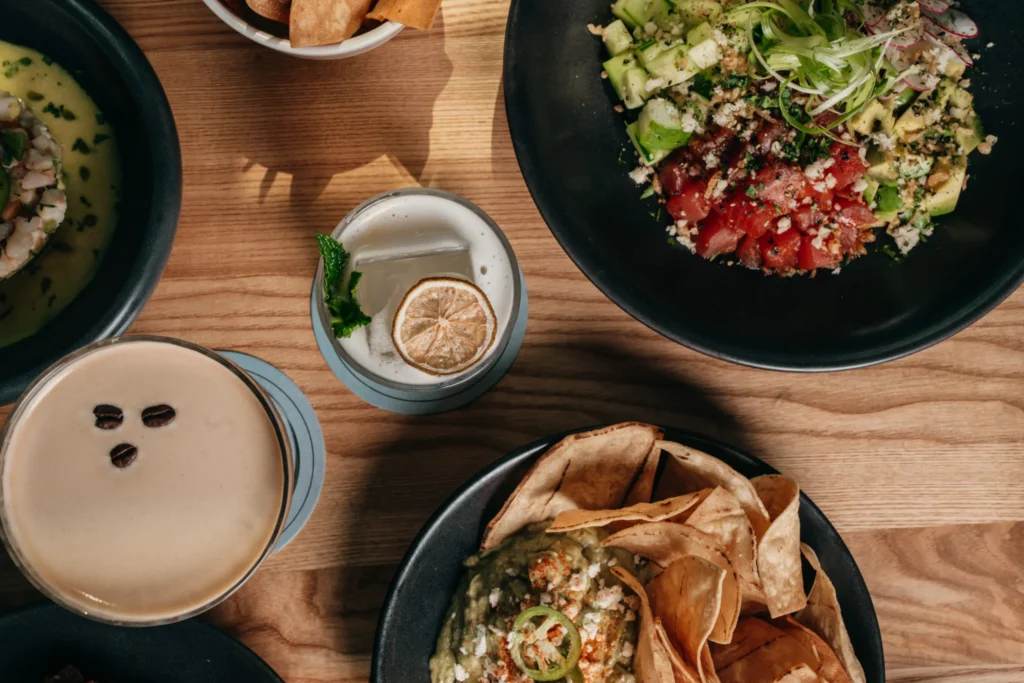
A good ceviche pairing complements the acid and freshness instead of smothering them. Heavy, oaky or sweet drinks clash with lime. Crisp, bright ones work.
Cocktails
Ceviche brings plenty of brightness to the table, so we like drinks that can meet that freshness without overwhelming it. At Ray’s, the 3 Alarm Watermelon Marg is an easy match, with watermelon, cucumber, lime, and a touch of heat that plays naturally with the jalapeños in our prawn ceviche. The Orange Julius Marg takes a softer, citrusy direction, while the Pineapple Express brings pineapple, lime, and ginger alongside mezcal for more depth.
Wine and Beer
With ceviche, we like wines that keep the plate feeling bright and fresh. Sauvignon Blanc brings zesty acidity that works naturally with the lime, while Pinot Grigio offers a clean, easy-drinking option alongside the fresh prawn, mango, and avocado.
Zero-Proof Options
Sparkling water with lime, grapefruit soda and herby mocktails all stay bright. Chicha morada, Peru’s purple corn drink, adds a sweet, spiced contrast.
Whatever you pour, keep it fresh and let the plate lead.
Where We Find Great Ceviche in Vancouver

Our Prawn Ceviche is $14.75, and that number tends to get a second look once the plate lands. It starts with fresh prawn, bright with lime and cooled down by mango and avocado, then red onion and jalapeño to keep it awake and cilantro to finish. What sets ours apart is the small stuff: a drizzle of chive oil that rounds out the acid, and corn chips we make in-house so they’re crisp enough to scoop without snapping. It’s gluten-free, it’s built to share, and it’s the kind of plate that disappears fast.When we are looking for great ceviche in Vancouver, we look for fresh preparation, quality seafood, and a marinade that stays bright and lively. Ceviche is also made for sharing, especially alongside a few cold drinks and other plates.
At Ray’s, 1131 Mainland Street in Yaletown, that spirit fits naturally with our Classic Comfort approach. Our menu brings together handmade pastas, burgers, comfort classics, and share plates, with fresh options that pair easily with a refreshing cocktail or crisp white.
Ray’s happy hour runs daily from 2 PM to 5 PM and again from 10 PM until close, so you can settle in for a few bright bites and drinks, whether you stop by earlier in the day or later in the evening.